
Heart Care
Allen Hospital Cardiovascular Center
Allen Hospital and our team of cardiologists form the only comprehensive heart care center in the Cedar Valley. Allen Hospital treats nearly all heart issues with a team of experienced cardiac specialists in Waterloo as well as outreach locations in Charles City, Cresco, Grundy Center, Independence, Sumner, Waverly and West Union. The physicians and staff are committed to the highest level of heart care for patients in Northeast Iowa while offering a wide range of services including:
- Cardiovascular and thoracic surgery (open heart)
- Cardiovascular imaging
- Electrophysiology
- Advanced heart failure treatment and care
- Enhanced External Counterpulsation (EECP)
- Treadmill stress test
- Holter monitor and event recorder
- Heart disease prevention
- Peripheral and vascular therapies
- Sleep apnea clinic
- Cardiac and pulmonary rehabilitation
Award-Winning Care
Allen Hospital is often recognized as one of the top heart care programs in the region and nationwide based on fewer complications, better outcomes and patient satisfaction. Thanks to that tradition of excellence, we continue to expand capabilities that allow patients to receive specialized care close to home.
Assess Your Risk
In five quick minutes, you can learn your risk for a heart attack or stroke with this assessment from the American Heart Association. If you are at risk, we can help you get on the path to a stronger, healthier you.
Cardiovascular and Thoracic Surgery Clinic
Dr. Bhavik Patel leads the area's only open-heart surgery program. Experience matters, and the surgery team at Allen Hospital has completed more than 8,000 open-heart procedures.
Cardiac
- Coronary artery bypass grafting
- Aortic valve repair
- Mitral valve repair/replacement
- Minimally invasive mitral valve repair/replacement
- Thoracic aneurysm repair
- Aortic dissection repair
- Aortic transection repair
- Atrial septal defect repair
- Extracorporeal membrane oxygenation (ECMO)
- Transcatheter Aortic Valve Replacement (TAVR)
Thoracic
- Thorascopic wedge resection
- Decortication
- Lobectomy
- Pneumonectomy
- Chest wall mass resection
- Chest wall fractures (ribs/sternum)
- Thymectomy
- Thorascopic sympathectomy
- Repair or diaphragmatic defect
- Diaphragmatic plication
- Pericardial window
Vascular
- Abdomen aortic aneurysm repair
- Ascending thoracis aortic aneurysm repair
- Iliac stent
- Fem-pop bypass
- Subclavian stents
- Femoral endarterctomy
- Carotid endarterectomy
- Carotid body tumor resection
We offer evaluation and intervention for lung nodules at the Cardiovascular & Thoracic Surgery Clinic. A lung nodule is a small irregularity within lung tissue that can be round or oval-shaped and malignant or benign.
Lung nodules are often discovered through scans ordered for other conditions or because of risk factors for lung cancer, including:
- Smoking or vaping
- Exposure to radon or asbestos
- Previous radiation therapy
- Family history of cancer
Nodules measuring 6mm or greater require further testing and/or CT scans. The lung nodule clinic will facilitate the evaluation, follow up and biopsies of irregularities as clinically indicated.
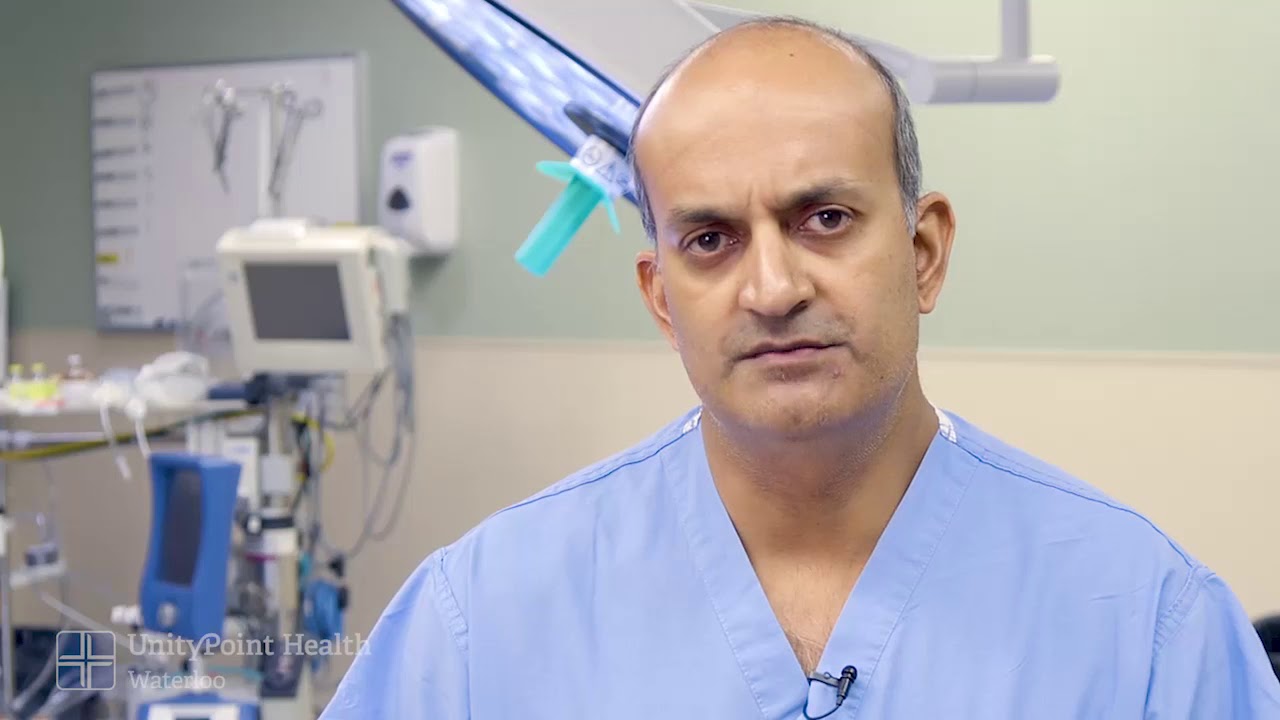

Diagnostic Procedures
Using the most sophisticated tools and advanced procedures available, doctors at Allen Hospital in Waterloo can quickly and accurately diagnose and treat your heart condition in our chest-pain-accredited heart and vascular center.
- On average, heart attack patients are treated 11 minutes faster at Allen Hospital than most hospitals across the nation.
- We developed a process to quickly move heart attack patients from the emergency department to our catheterization (cath) lab. As a result, we remove the blockage in your artery sooner, which lessens tissue damage and offers you a better outcome. Our current door to balloon median time is 51 minutes.
Procedures
Heart disease can go undetected for years. We offer a heart scan (or CT Calcium Scoring) to measure the amount of calcified plaque in the coronary arteries. Plaque is made up of fats, cholesterol, calcium and other substances in the blood. Over time, the plaque can harden and narrow the arteries, restricting blood flow to the heart and increasing the risk of a heart attack. A heart scan may benefit people with risk factors such as high blood pressure, high cholesterol, diabetes, smoking history, obesity or a family history of heart disease.
- Fee: $150
- Scheduling: A doctor's referral is required before scheduling and the fee typically isn’t covered by insurance.
- Call (319) 235-5100 to learn more or schedule your Heart Scan.
How does a Heart Scan work?
A heart scan is for men and women ages 40-70. There are no injections, treadmills or pre-test fasting. Instead, a computed tomography (CT) machine takes X-ray pictures of your heart and detects plaque in the arteries, creating a number expressed as an Agatston Score. This number determines your heart disease risk helps your doctor assess your risk of heart disease. Here’s what the score ranges indicate:
- 0: No calcium detected; very low risk of heart attack
- 1-100: Mild calcium buildup; mild risk of heart disease
- 101-400: Moderate calcium buildup; moderate risk of heart disease
- Over 400: Extensive calcium buildup; high risk of heart disease or heart attack
Who can get a Heart Scan?
All you need is a doctor’s referral.
Arterial blockage is diagnosed during cardiac catheterization. Dye is inserted into the arteries of the heart using a long, flexible tube. The dye illuminates the blockage, allowing cardiologists to see its size and location. Doctors then develop a custom treatment plan.
Specialized procedures, such as implanting pacemakers and defibrillators, are performed in our EP lab. Our EP lab treats patients with abnormal heart rhythms (arrhythmias), and the minimally invasive procedure uses pinpoint precision, allowing patients to return to everyday activities quickly – sometimes in a matter of days.
Doctors diagnose and evaluate circulatory problems such as life-threatening blockages and narrowing of arteries through sophisticated, non-invasive screening methods in the Vascular lab. The most common conditions diagnosed include:
- Aneurysm – A weakened area of the inner wall of a blood vessel that causes it to balloon out of shape.
- Occlusive disease – A complete block of blood flow through a vessel.
- Peripheral vascular disease (PVD) – Reduced blood flow to the arms and legs.
- Vasospastic disorders – Blood vessel spasms resulting in decreased vessel opening.
Heart Care History at Allen Hospital
1966
Waterloo's first Intensive Care Unit (ICU) opens at Allen Hospital with seven beds on the fourth floor.
1968
A seven-bed Coronary Care Unit opens on the fourth floor opposite of the ICU. This unit was dedicated to treating patients with heart-related illnesses.
1970
Dr. Frank Coyle joins the staff as a vascular surgeon and a driving force for the cardiac program that we know today.
1978
The Cardiac Catheterization Lab is added. Many other services were added shortly after, including cardiac rehabilitation, stress testing and echocardiography.
1980
The ICU is remodeled with visions of beginning an open heart surgery program.
1982
The first open heart surgery is performed.
1993
The Northeast Tower is completed, which is the current site of the ICU.
1996
The 3,000th open heart surgery is performed at Allen Hospital.
2009
Allen Hospital opens the doors to the $47 million Pauline Barrett Pavilion, which houses the emergency department and heart and vascular center. The pavilion is named for Waterloo philanthropist Pauline Barrett, who donated $5 million to the capital campaign.
2021
Allen Hospital becomes first hospital in the Cedar Valley to do a minimally invasive TAVR (Transcatheter Aortic Valve Replacement) procedure.
2022
Allen Hospital is once again named a Top 50 Cardiovascular Hospital by Fortune/IBM Watson Health. In October, the heart program celebrates its 7,777th open-heart surgery all-time.
2025
Allen Hospital enjoys a record year with 328 open-heart surgeries (surpassing the
previous mark of 262 in 2003).
Heart Attack and Stroke Educational Resources
Heart disease and stroke are leading causes of death in the U.S. with someone experiencing a heart attack or stroke every 40 seconds. Knowing the warning signs can save a life. Similarly, quick action during cardiac arrest can double or triple someone's chance of survival. Learn how to perform CPR, how to use an AED and how to recognize heart attack and stroke warning signs and risk factors.