UnityPoint Health - Allen Hospital Center for Urology
Current Hours: 7:30 AM to 4:00 PM

Information
Number of patients waiting reflects the current number of patients waiting to be seen. This number changes frequently and is not exact.

Advanced Urology Care, Close to Home
Have you been referred out of town for advanced urology care? At UnityPoint Health – Allen Hospital Center for Urology, our team offers advanced treatments close to home, including robotic surgery and pediatric urology services, all in a supportive and patient-friendly environment.
We offer comprehensive treatment for urology conditions affecting the male and female urinary tract. Additionally, our team treats conditions of the male genital and reproductive system, such as prostate cancer and vasectomies. Urology focuses on conditions affecting the kidneys, bladder, urethra, adrenal glands and male reproductive system.
Our team includes Waterloo’s only specialists offering robotic urologic surgery, providing minimally invasive options with faster recovery times.
Appointments
Call (319) 233-0340 to schedule an appointment or request a referral.
Our Providers

Hayden Warner, MD
Urology

Holly Gaede, ARNP
Urology

Kayley Lawrence, ARNP
Urology

Tim Mulholland, MD
Urology

Rob Colby, ARNP
Urology
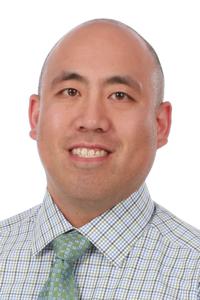
Daniel Lee, MD
Urology

Michelle Nepple, PA
Urology

Morgan Sharp, ARNP
Urology

Mark Newton, MD
Urology

Eric Andresen, MD
Urology

Eric Askeland, MD
Urology
Urology Conditions We Treat
- Bladder Disorders & Urinary Conditions
- Nerve Damage
- Overactive Bladder
- Recurrent UTIs
- Urinary Incontinence
- Urinary Retention
- Voiding Dysfunction
- Kidney Care
- Kidney Stone Disease & Treatment
- Men's Health
- Erectile Dysfunction (Impotence)
- Infertility
- Sexual Dysfunction
- Prostate Health
- Prostate Disorders
- Urologic Cancer Care & Surgical Oncology
- Bladder Cancer
- Kidney Cancer
- Prostate Cancer
- Testicular Cancer
- Pediatric Urology
- General Pediatric Urology Conditions
Procedures Our Urologists Perform
- Bladder Biopsy — samples of the bladder are removed and sent for testing
- Bladder Instillations — instilling medication into bladder
- Bladder Ultrasound / Scanning of Post Void Residual Urine — procedure to determine how much urine is left in the bladder after a patient voids
- Botox Injections — used to treat overactive bladder or incontinence.
- Catheter Changes — helps drain the bladder by inserting a rubber catheter into the bladder through the urethra
- Cystourethroscopy — allows the physician to see the inside of the bladder through a cystoscope. In our office, the patient has the capability to view this procedure and findings on a monitor
- Destruction and Removal of Lesions
- Fulguration of Bladder Lesions — procedure to destroy a bladder lesion by burning it
- Injections of Eligard, Lupron and Firmagon — hormone injection for the treatment of prostate cancer
- Penile Injections for Sexual Dysfunction — medication injections into penis for treatment of sexual dysfunction
- Percutaneous Nerve Evaluation — procedure that helps with voiding problems
- Prostate Biopsy — takes an image of prostate and samples of the prostate to test for prostate cancer.
- Rezum™ Treatment for BPH — minimally invasive procedure using water vapor to treat BPH
- Urethral Dilatations — procedure to help to open the urethra
- Urodynamics — study to evaluate your bladder's function and efficiency
- Vasectomy — prohibits sperm from reaching semen that is ejaculated from penis
- Cryotherapy — using cold gas to freeze the entire prostate to eradicate cancer cells
- Interstim — sacral nerve stimulation to treat overactive bladder
- Laparoscopy — surgical procedure performed on the abdomen or pelvis through small incisions
- Laser — surgical procedure performed with a laser that delivers a shallow cut
- Robotic Surgery — surgical procedure using a very small tool attached to a robotic arm where the doctor controls the robotic arm with a computer
- Adrenalectomy — one or both adrenal glands are removed
- Cystectomy — removal of part or entire bladder
- Nephrectomy (partial and total) — removal of part or the entire kidney
- Prostatectomy — removal of the prostate
- Pyeloplasty — reconstruction or revision of the renal pelvis to drain the kidney
- Ureteral Reimplant — corrects abnormality in ureter to improve drainage
- Extracorporeal Shockwave Lithotripsy (ESWL) — use of shockwaves to break up kidney stones
- Laser Lithotripsy — removal of stones from the urinary tract
- Percutaneous Nephrolithotripsy (PCNL) — removal of kidney stones
- Ureteroscopy — examination of upper urinary tract
- Artificial Sphincter — for male stress incontinence
- Macroplastique Injections — for stress incontinence
- Slings — for male and female incontinence using mesh or autologous fascia (natural tissue)
- Penile Plication — penile curvature or Peyronie's disease
- Penile Prosthesis — for refractory erectile dysfunction
- Microsurgical varicocelectomy — corrects enlarged veins in the scrotum
- Vasectomy reversal — reconnects the tubes (vas deferens) that were cut during a vasectomy
- Circumcision and circumcision revision – removal of foreskin from the penis
- Cystoscopy – allows the physician to see the inside of the bladder through a cystoscope
- Meatotomy – surgery to reopen a scarred or narrowed urethral opening
- Orchidopexy — surgery to move undescended testicle into the scrotum